West Nile – the frontline of Uganda’s fight against leprosy
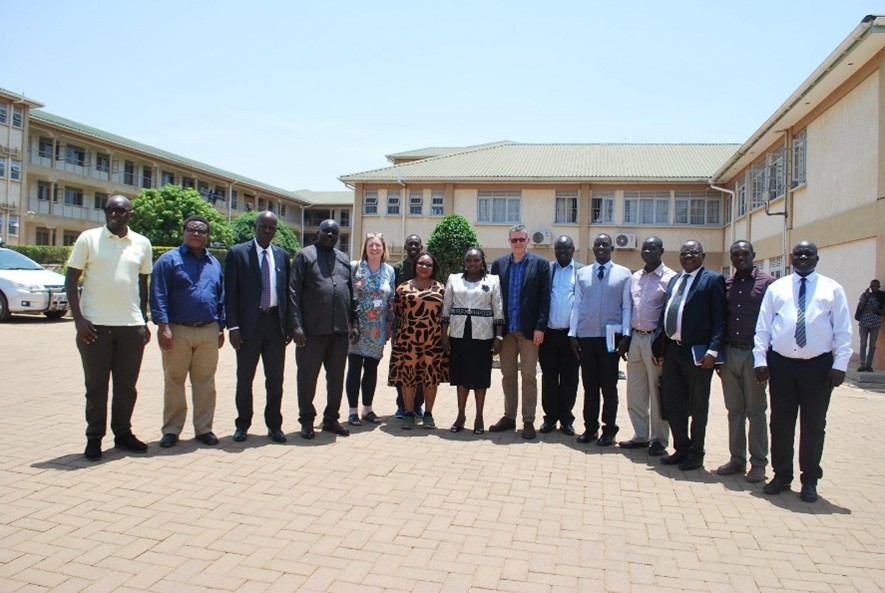
Discussing how partners can work together to address leprosy in West Nile, at Muni University.
West Nile – the frontline of Uganda’s fight against leprosy
I’ve just returned from Uganda, where I travelled with The Leprosy Mission Great Britain’s CEO, Peter Waddup, and local partners to understand the realities facing people affected by leprosy. Uganda has built an extensive primary healthcare system and a strong network of community health workers. Yet, like many countries facing rapid population growth and regional displacement, some areas—particularly West Nile—remain under strain. The challenge of diseases such as leprosy reveals how fragile progress can be when poverty, displacement and limited resources intersect.
Our journey began in Kamuli, where we met the team at Kabukye Trust, a small but determined Ugandan organisation working to improve care for conditions that demand long-term treatment and dignity: Type 1 diabetes, sickle cell disease and leprosy. Their approach is simple but powerful—working alongside communities, strengthening health services and building trusted relationships with government systems so that people living with chronic illness are not lost to care.
During the visit we saw how easily people can fall through the gaps. In one rural village we met a young man suspected of having leprosy who had delayed seeking confirmation because the specialist hospital was several hours away and the costs of travel were beyond his family’s means. Such stories are not uncommon. Treatment is free once a diagnosis is made, but the journey to diagnosis can be long where health workers rarely encounter the disease and communities remain unfamiliar with its symptoms.
The challenge becomes sharper in West Nile, Uganda’s north-western frontier bordering the Democratic Republic of Congo and South Sudan. The region hosts large refugee populations and accounts for the majority of the country’s reported leprosy cases. High levels of childhood cases and disability at diagnosis suggest that many people reach care late and that transmission continues.
Encouragingly, leaders in the region are responding with ambition. Health officials, clinicians, the National TB & Leprosy Programmes and researchers are exploring plans for a regional centre for leprosy and tropical diseases—one that could serve Uganda while supporting cross-border cooperation with South Sudan and the DRC. Such a hub could strengthen training, surveillance and coordinated disease control across the region. The ideas and the will are plentiful, but resources still need to be secured to turn the dream into reality.
Academic partnerships will be central to this effort. At Muni University in Arua, whose mission is to address the challenges facing West Nile, faculty leaders spoke passionately about embedding leprosy in medical training and expanding research into the disease. Working with international partners, universities could help generate the evidence needed to understand transmission, measure the economic impact on families and train the next generation of health professionals.
For the people we met—including refugees and host communities alike—the burden of leprosy remains profound. Many struggle with the pain of leprosy reaction, disability and stigma while trying to sustain their families on limited means. Yet they are also eager to organise, learn and take part in the solution.
The lesson from Uganda is clear: defeating leprosy will require more than medicine. It will demand partnership—between governments, communities leaders, people affected, universities and international organisations—and cooperation across borders. In West Nile, during this visit, the foundations for that partnership were already being laid
Sian Arulanantham
Head of Programmes and Research