Mapping Leprosy Incidence using the Leprosy Elimination Monitoring Tool (LEMT) and Assessing the Influence of Sporadic Cases on Transmission Dynamics at the District Level
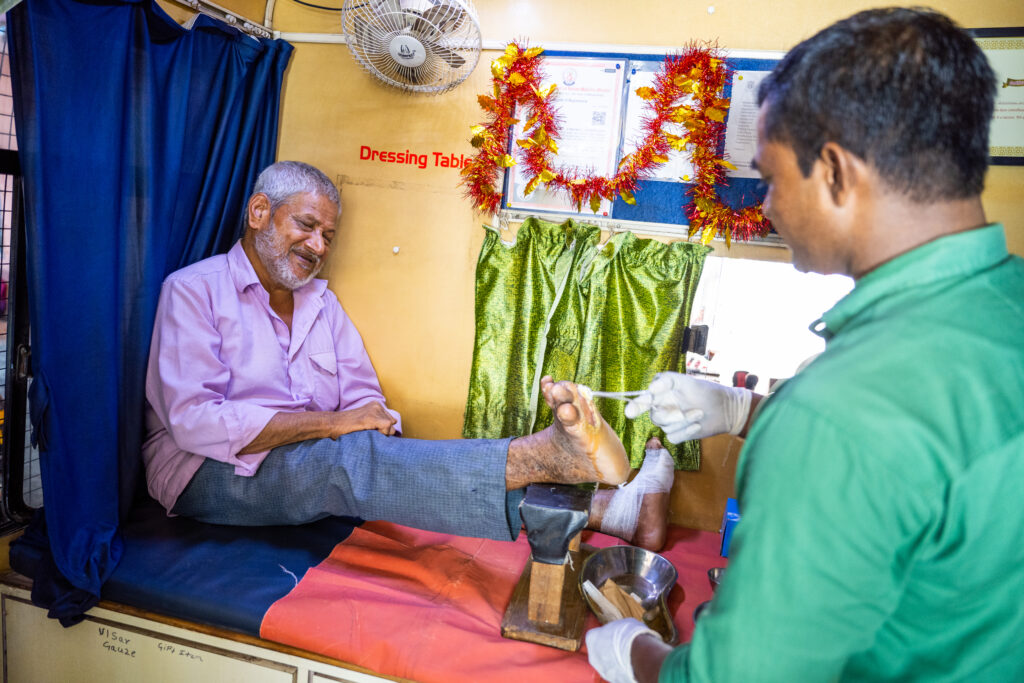
Mapping Leprosy Incidence using the Leprosy Elimination Monitoring Tool (LEMT) and Assessing the Influence of Sporadic Cases on Transmission Dynamics at the District Level” is a 21-month multi-country study (March 2026 onwards) led by The Leprosy Mission Trust India (TLMTI) in partnership with TLM International Bangladesh (TLMIB). Implemented in selected districts in India (Amravati and Sangli, Maharashtra) and Bangladesh (Rangamati, Khagrachari, Magura, Narail, Jhalakathi and Pirojpur), the study applies the WHO’s newly introduced Leprosy Elimination Monitoring Tool (LEMT) at the district level for the first time in a research context in the region. The project combines spatial disease mapping, contact and community screening, and qualitative research to better understand ongoing transmission — particularly in so-called “white districts” where no cases have been reported for years. By generating granular, village-level maps and investigating hidden or sporadic cases, the study aims to provide robust evidence to guide targeted interventions, optimise existing tools such as PEP and contact tracing, and support national strategies toward zero transmission of leprosy.